5 Spring Lawn Mistakes Most Homeowners Don’t Realize They’re Making
Spring is when most lawns across the Miami Valley start to wake up again — grass turns greener, growth speeds up, and homeowners become eager to get outside and begin the season. But even with the best intentions, many people unintentionally make lawn care mistakes in early spring that can limit growth for the rest of the year.
Whether you live in Kettering, Oakwood, Dayton, Beavercreek, Centerville, or any of our surrounding communities, avoiding these mistakes will help your lawn thrive from spring through fall.
Mistake #1: Mowing the Grass Too Short
This is one of the most common spring issues. When grass is cut too short — a practice known Mistake #1: Mowing the Grass Too Short
Cutting the lawn too short is easily one of the most damaging spring habits — yet it’s also one of the most common. Many homeowners assume that mowing lower will reduce how often they need to cut, or help the lawn “wake up” faster after winter. Unfortunately, the opposite is true. When grass is mowed too short, a condition often referred to as scalping, the plant loses a significant portion of the leaf surface it relies on to produce energy through photosynthesis.
Grass blades aren’t just cosmetic; they are the plant’s solar panels. Each blade helps fuel root growth, nutrient uptake, and new tissue development. When those blades are shortened drastically, the turf is forced into survival mode. Instead of expanding outward and rooting deeply, the lawn shifts all of its remaining energy into repairing the damage. That shift weakens the entire system, making early spring an especially vulnerable time to mow incorrectly.
What Happens When You Mow Too Low?
Scalping creates a cascade of stress-related problems that often persist throughout the rest of the growing season. A lawn cut too short becomes:
- More susceptible to weeds. Weeds thrive in thin, stressed turf. When the canopy is too short, more sunlight reaches the soil surface, activating dormant weed seeds (including crabgrass and broadleaf species). Healthy, properly mowed grass naturally shades the soil and suppresses weed germination.
- Prone to drought stress. Longer blades help retain moisture by shading the soil and reducing evaporation. Short-cut lawns dry out faster, heat up more quickly, and struggle to maintain hydration during warmer spring days.
- Patchy and weak in high-traffic areas. Without enough leaf surface to generate energy, the root system remains shallow. Shallow roots are easily damaged by foot traffic, pets, kids, or even normal mowing patterns, causing thin or bare spots to appear.
- More vulnerable to temperature swings. Early spring often brings sudden cold snaps or warm surges. Grass cut too short cannot regulate itself as effectively, making it slower to stabilize as the season progresses.
What Is the Correct Mowing Height?
For cool-season grasses commonly found throughout the Miami Valley — including lawns in Kettering, Oakwood, Dayton, Beavercreek, and nearby communities — the ideal mowing height is generally 3 to 4 inches.
This height allows the grass to develop a deeper, more resilient root system, improving color, thickness, and overall health. Taller grass also shades the soil more effectively, helping prevent spring weeds from establishing and reducing the amount of water the turf needs as temperatures rise.
The “One-Third Rule” Every Homeowner Should Follow
As a simple guideline, never remove more than one-third of the grass blade in a single mowing session. Cutting more than that forces the plant into recovery mode and slows growth dramatically. Following the one-third rule keeps the lawn healthy, stable, and able to rebuild after winter dormancy.
If your lawn is already too tall, raise the mower deck and lower it gradually over several mowings rather than trying to “fix” it in one cut. This approach protects the turf from unnecessary shock and helps it transition into the spring growth cycle smoothly.
Mistake #2: Watering Too Early or Too Often
One of the biggest misunderstandings in spring lawn care is the belief that the lawn needs regular watering as soon as temperatures begin to warm up. Homeowners see the first signs of green and assume the grass is “waking up thirsty.” But in reality, early spring is often the worst time to begin a frequent watering routine—especially in the Miami Valley, where natural rainfall is typically more than enough to sustain cool-season grasses through April and much of May.
Watering too soon or too often saturates the soil, reduces oxygen availability around the roots, and encourages shallow root development. Over time, the lawn becomes dependent on constant irrigation rather than building the deeper, more resilient root system it needs to withstand summer heat.
Why Early Spring Watering Causes More Harm Than Good
Even though the weather may feel pleasant, the soil is still cool from winter, and grass roots remain in a slow-growth state. Excess moisture in this phase creates several problems:
- Shallow root growth. When water is constantly available near the surface, grass roots stop growing downward. This leads to a weak foundation that struggles as soon as summer heat or dry spells arrive.
- Higher risk of fungal diseases. Spring soils hold moisture longer, especially in shaded areas of neighborhoods like Oakwood or Centerville. Constant watering creates ideal conditions for mold, leaf spot, and other turf diseases.
- Compaction in clay-heavy lawns. Many lawns in communities such as Kettering and Beavercreek include clay-based soil. When these soils stay wet, they tighten and compact, making it even harder for roots to expand later in the season.
- Wasted time, money, and water. Overwatering in the spring produces no meaningful benefit, yet it increases utility bills and adds unnecessary wear on irrigation systems.
When Should You Start Watering Regularly?
For most lawns in the Miami Valley—including Dayton, Moraine, and Springboro—the best time to begin consistent watering is when the weather transitions from mild to warm and the soil actually begins to dry between rainfall cycles. This typically occurs in late May or early June, depending on temperature patterns.
A good rule of thumb is simple: Only water when the lawn shows signs that it needs it. These include:
- Grass blades folding inward or developing a bluish tint
- Footprints remaining visible after walking across the lawn
- Soil drying out more than one inch below the surface
When you do begin watering, aim for deep, infrequent sessions rather than short, daily ones. This encourages deeper root growth and prepares the lawn for the heat of summer.
Paired with proper mowing height and seasonal core aeration, smart spring watering is one of the best ways to build a dense, drought-resistant lawn that performs well from early spring through fall.
Mistake #3: Ignoring Soil Compaction
Soil compaction is one of the most widespread—and least recognized—issues affecting lawns throughout the Miami Valley. Most homeowners don’t realize their lawn is compacted because the symptoms often appear gradually: thinning grass, patchy color, weak root growth, or water that pools on the surface. These problems are frequently misdiagnosed as poor fertilizing, bad seed, or inconsistent watering, when in reality the underlying issue is simply that the soil has become too dense for roots to grow properly.
Compaction is especially common in areas with heavy clay content, such as Kettering, Dayton, Beavercreek, and Moraine. Clay soils hold nutrients well, but they also tighten easily under pressure, making them some of the most compaction-prone soils in Ohio. Combine this with normal foot traffic, mowing equipment, pets, and seasonal freeze–thaw cycles, and most lawns develop compaction far sooner than homeowners expect.
What Compaction Really Does to a Lawn
Healthy soil needs three things: air, water, and space for roots to grow. When soil particles are squeezed tightly together, those essential spaces disappear, creating a series of problems that gradually weaken the turf:
- Restricted Root Growth. Roots become shallow because they physically cannot push through dense soil. This makes the lawn far more vulnerable to drought, heat, foot traffic, and disease.
- Poor Water Absorption. Instead of soaking into the soil, water pools on the surface or runs off into sidewalks and driveways. Even heavy watering won’t fix a compacted lawn.
- Nutrient Inefficiency. Fertilizer sits near the surface instead of reaching the roots. Many homeowners mistakenly apply more fertilizer when the real problem is that the soil is too tight for absorption.
- Increased Weed Pressure. Thin, stressed lawns allow opportunistic weeds like plantain, crabgrass, and clover to take hold. Compacted soil provides exactly the conditions these weeds need to thrive.
These impacts often worsen after winter. When spring arrives, homeowners in Oakwood, Centerville, and Bellbrook may notice their lawns are slow to green up or don’t respond well to watering or fertilizer. In almost every case, compaction is a major factor.
How to Know If Your Soil Is Compacted
You don’t need specialized tools to identify compaction. A few simple indicators include:
- It’s difficult to insert a screwdriver several inches into the soil
- Water sits on the surface for longer than a few minutes after rain
- Grass feels spongy or thin, especially in sunny areas
- Footprints remain visible for more than a few minutes
If multiple signs are present, the lawn is almost certainly compacted—especially if it receives regular foot or pet traffic.
The Solution: Core Aeration
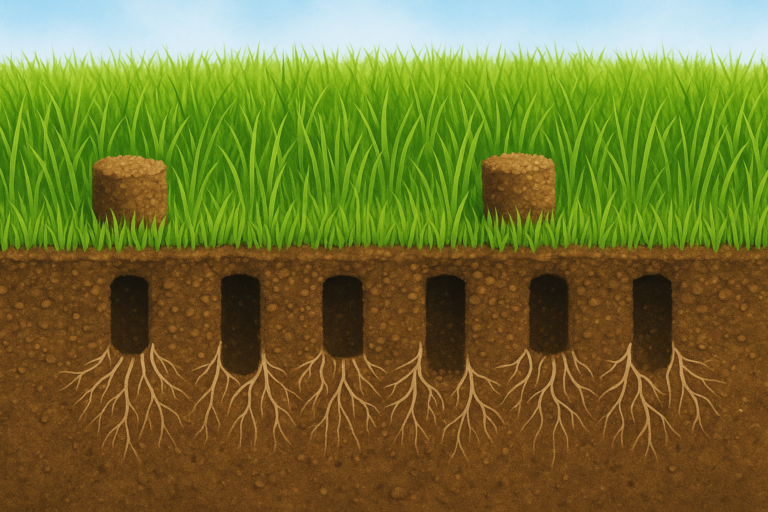
Core aeration is the most effective way to relieve soil compaction because it removes small plugs of soil, creating open pathways for air, water, and nutrients to reach the root zone. Over time, these channels help the soil structure reset itself, leading to improved drainage, deeper roots, and healthier turf.
If your lawn hasn’t been aerated in at least a year—and especially if you live in a clay-heavy area like Washington Township or Springboro—chances are high that compaction is holding your lawn back more than you realize.
Learn more about how aeration works and why it’s essential by visiting our Core Aeration Service Page.
Mistake #4: Applying Fertilizer at the Wrong Time
Spring fertilizer can give your lawn an excellent boost — but only when it’s applied at the right moment. One of the most common mistakes homeowners make is fertilizing far too early, usually in March or early April when temperatures first begin to rise. While it feels like the start of the growing season, the soil is still cold, the root system is not fully active, and the grass simply isn’t ready to use the nutrients effectively.
Applying fertilizer too soon causes the plant to push top growth before the roots have woken up. The lawn may look greener for a short time, but underneath the surface the root system remains weak, shallow, and unable to sustain the new growth. This mismatch often leads to mid-spring stress, uneven color, and a lawn that struggles during the first early heat wave.
Why Timing Matters More Than Most Homeowners Realize
Cool-season grasses grown throughout the Miami Valley — including lawns in Oakwood, Kettering, Centerville, and Beavercreek — follow a predictable pattern of waking up after winter. For the first several weeks of spring, the lawn focuses primarily on root recovery, not blade growth. During this stage, the grass is not prepared to absorb or utilize heavy fertilization.
If fertilizer is applied early, when soil temperatures are still low, several problems can occur:
- Uneven growth across the lawn. Sunnier sections warm up first, absorbing more nutrients, while shaded or cooler sections lag behind — creating a patchy, inconsistent appearance.
- Weak, shallow roots. The plant spends energy on blade growth instead of establishing deeper roots. This creates vulnerability during summer heat and drought conditions.
- Wasted fertilizer and runoff. Nutrients applied before the grass is actively growing often wash away during spring rainfall, reducing effectiveness and increasing the risk of nutrient loss.
- Increased thatch buildup. Rapid top growth without strong roots contributes to excess thatch, which can choke out new growth and trap moisture.
So When Should You Actually Fertilize?
The best time for spring fertilization is when the grass has fully exited winter dormancy and is actively growing — typically when soil temperatures reach consistent levels in the mid-50s to low 60s. In the Miami Valley, this usually falls in late April or early May, depending on the year’s weather pattern.
Homeowners in communities like Dayton, Moraine, and Springboro will often notice the lawn turn a natural deep green before it truly begins to fill in. This is a far better time for fertilizer because the root system is awake and capable of absorbing nutrients efficiently.
Another important tip: avoid fertilizing just before or after heavy rainfall. Excess water can wash nutrients away, leading to inconsistent results or even fertilizer burn. A dry-to-damp soil condition is ideal.
Aeration + Fertilizer = The Best Results
If you want your spring fertilizer to work even better, pairing it with core aeration ensures the nutrients reach the root zone instead of sitting near the surface. Aeration opens channels in the soil, making your fertilizing investment significantly more effective — especially in clay-heavy lawns throughout Washington Township, Bellbrook, and Beavercreek.
For best long-term performance, many homeowners schedule fertilizer in the spring and then overseeding in early fall, when temperatures and soil conditions create ideal conditions for new grass development.
Mistake #5: Neglecting Overseeding After Winter Damage
Winter is tough on grass — especially cool-season varieties common throughout the Miami Valley. Even when the lawn looks fairly healthy going into winter, the cold season can leave behind more damage than homeowners expect. Snow mold, freeze–thaw cycles, foot traffic, and periods of standing moisture all contribute to thinning turf and bare patches once spring arrives.
Many homeowners assume these thin or bare areas will “fill in on their own,” but cool-season grasses do not spread aggressively across open soil. Without help, those empty spots often remain empty — or worse, become the perfect landing zone for early spring weeds. That’s why overseeding is one of the most important steps in rebuilding a lawn after winter.
Why Overseeding Is Essential After Winter
Overseeding introduces fresh, vigorous grass seed into the lawn to replace what was lost during the colder months. These new seedlings grow in between the existing grass plants, thickening the lawn and improving its ability to withstand heat, drought, foot traffic, and disease later in the year.
If overseeding is skipped — especially for two or more seasons — the lawn gradually loses density. Sunlight penetrates to the soil surface, weeds germinate more easily, and the turf becomes increasingly uneven.
Common Winter Problems Overseeding Helps Repair
- Snow Mold: Circular patches of dead or matted grass often appear after snow melts. These zones rarely repair themselves without new seed.
- Freeze–Thaw Damage: Repeated temperature swings cause the soil to expand and contract, lifting and loosening the turf. Overseeding helps stabilize these areas with new growth.
- High-Traffic Wear: Lawns in communities like Kettering, Centerville, and Springboro often see heavy use from pets and families during winter. These worn spots benefit greatly from fresh seed.
- Poor Drainage Areas: Yards with heavier clay-based soils — common in Dayton, Beavercreek, and Moraine — stay wetter longer in winter, leading to turf thinning and bare patches that overseeding can restore.
Early Spring Overseeding vs. Fall Overseeding
While spring overseeding can help repair winter damage, fall is still considered the ideal time to overseed in southwest Ohio. Soil temperatures remain warm into early fall, moisture becomes more consistent, and the weed pressure drops significantly — giving new seedlings the best possible environment to establish deep roots.
However, if your lawn has significant winter damage, overseeding in early spring can still provide meaningful improvement. Just remember that spring germination may be slower, and weeds may compete more aggressively, so pairing overseeding with proper mowing height and watering is essential.
Why Overseeding Works Best After Core Aeration
Planting new seed directly into compacted soil rarely gives strong results. That’s why overseeding is typically paired with core aeration. Aeration removes small plugs of soil and creates thousands of tiny “seed pockets” where new seedlings can root more easily.
This combination dramatically improves germination rates, especially in older or clay-heavy lawns throughout Oakwood, Washington Township, and Bellbrook.
If your lawn is showing signs of winter stress, seasonal thinning, or patchiness, overseeding is the most reliable way to rebuild density and restore an even, healthy appearance.
Learn more about how overseeding works — and why it’s essential for long-term lawn health — by visiting our Overseeding Service Page.
How to Give Your Lawn the Best Start This Spring
Avoiding these simple mistakes can dramatically improve the health and appearance of your lawn. By mowing at the correct height, watering only when necessary, addressing compaction, and overseeding strategically, you set the foundation for a greener, thicker yard all year long.
If you’d like help diagnosing soil compaction, planning overseeding, or scheduling core aeration this season, we proudly serve homeowners throughout the Miami Valley, including:
Kettering • Oakwood • Beavercreek • Centerville • Dayton • Bellbrook • Washington Township • Moraine • Springboro
Request a Spring Lawn Evaluation
Aeration Guides
- What is lawn aeration and what does it do?
- How to aerate your lawn (DIY guide)
- How to overseed a lawn
- When to aerate and overseed a lawn in Ohio
- Spring, fall, or dormant seeding?
- Best grass seed for overseeding in Ohio
- Watering after overseeding
- Aerating vs. dethatching
- How much does core aeration cost?