How to Prepare Your Lawn & Property for Spring Storm Season in Ohio
Spring brings some of the most dramatic weather shifts in Ohio — warm days, sudden temperature drops, heavy rain, strong winds, and the occasional early-season thunderstorm. These storms don’t just impact your lawn. They can affect your home’s foundation, landscaping, drainage, and long-term property health.
Whether you live in Dayton, Kettering, Centerville, Beavercreek, or anywhere across the Miami Valley, taking a few preventive steps now can protect your lawn, reduce damage risks, and save money on repairs later.
1. Strengthen Your Lawn Before Heavy Rain Arrives
A dense, healthy lawn acts like a natural sponge during heavy rain, absorbing and distributing water down into the soil rather than letting it pool on the surface. When the turf is thick, roots are deep, and the soil has good structure, storms are far less likely to cause lasting damage. But when a lawn is thin, compacted, or already stressed from winter, it loses its ability to manage sudden rainfall effectively.
During spring storm season, weak or compacted lawns typically experience one or more of the following problems:
- Standing water and puddling. When the soil is compacted, water cannot penetrate downward, so it sits on the surface. These puddles suffocate roots, promote fungal growth, and can remain for hours or even days after a storm. Over time, areas that consistently hold water often turn muddy, spongy, or completely bare.
- Soil erosion. Heavy rains easily wash away topsoil from thin turf areas because there isn’t enough root density to hold the soil in place. This erosion can expose roots, create uneven surfaces, and cause mulch or landscaping stones to shift out of position. Sloped yards — especially those found in communities like Oakwood, Bellbrook, and parts of Centerville — are particularly vulnerable.
- Root damage. Saturated soil deprives roots of oxygen, leading to shallow growth and long-term stress. Repeated storms compact the soil even further, making it harder for roots to recover. When a major downpour hits, lawns with weak roots often develop yellowing patches or sudden dieback in the days following the storm.
- Bare patches that worsen through the season. Anywhere water pools, soil shifts, or roots weaken, the turf becomes thin. These weak areas rarely recover on their own and typically expand throughout spring and summer. Once soil is exposed, weed seeds have a perfect entry point — meaning what begins as a small bare spot can quickly turn into a larger problem that persists year after year.
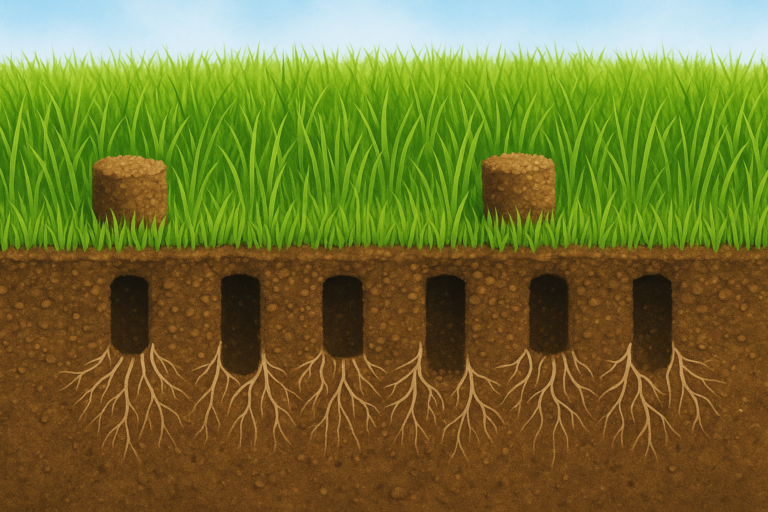
The good news is that many of these issues can be prevented with timely core aeration. By relieving compaction and improving water movement into the soil, aeration gives your lawn the structure it needs to handle heavy spring rainfall without suffering long-term damage.
One of the best early-season steps you can take is core aeration. Aeration improves drainage by reducing soil compaction and allowing rainwater to move downward instead of sitting on the surface. For homeowners in clay-heavy areas — including Washington Township and Moraine — this makes a noticeable difference in preventing runoff.
2. Clear Debris That Could Become Wind Hazards
Spring storms in Ohio often arrive with little warning and can include sharp wind gusts strong enough to move debris, break branches, and damage both landscaping and structures. While many homeowners focus on the lawn itself, one of the most effective storm-readiness steps is simply walking the property and removing or securing items that could become dangerous if lifted by the wind.
Start by clearing away anything lightweight or loose that could blow across the yard or strike your home. This includes:
- Dead branches. Winter often leaves trees with brittle limbs that fall easily during the first big wind event. Even small branches can gouge siding, tear window screens, damage downspouts, or flatten sections of new spring growth. Removing these early keeps them from becoming dangerous projectiles.
- Old mulch bags, plastic containers, and yard waste. Lightweight bags, cardboard, and leftover landscaping materials can travel surprisingly far once wind speeds pick up. These items not only clutter the yard after a storm but may clog drains or gutters if they blow against the house.
- Loose landscaping stones or edging. Decorative stones and edging blocks can shift during the winter freeze–thaw cycle, leaving them unanchored. Strong winds or heavy rain runoff can dislodge them completely, potentially damaging lawn equipment or washing them into drainage paths.
- Unsecured lawn furniture, cushions, toys, and grills. Patio pieces, outdoor cushions, children’s play items, and portable grills are some of the most common objects to blow over or roll into the yard. These can destroy tender spring grass, dent siding, or strike windows if storms intensify.
Many homeowners underestimate how little wind it takes to lift lightweight objects or push heavier items across the yard. Once airborne or sliding, even something as small as a lawn chair can rip up turf, damage gutters, or collide with vehicles or fencing.
Clearing these objects before the storm season ramps up is a simple but highly effective way to protect both your lawn and your home’s exterior. It also reduces cleanup after storms, preventing debris from smothering grass, blocking drainage, or damaging newly overseeded areas. A few minutes of preparation now can prevent hours of repair and lawn restoration later in the season.
3. Inspect Gutters, Downspouts, and Yard Drainage
Proper drainage is essential during periods of heavy spring rainfall. When water cannot move away from the home or disperse evenly across the lawn, it begins to collect in low points or flow in unintended paths. Over time, this can create both cosmetic and structural issues that become increasingly expensive to correct. Even a single storm can reveal drainage problems that were not obvious during drier months.
If water regularly pools near your home or travels across the yard in concentrated streams, it can lead to:
- Foundation settling or cracks. Excess moisture near the base of the home softens the soil, allowing the foundation to shift slightly over time. Repeated wet–dry cycles can cause small cracks that grow larger each season.
- Basement seepage or moisture intrusion. When water collects along exterior walls, hydrostatic pressure increases. This pressure can push moisture through hairline cracks or porous concrete, leading to damp spots, musty odors, or mold growth inside the basement.
- Soil erosion. Fast-moving water strips away topsoil, especially on sloped yards common in neighborhoods like Oakwood and Bellbrook. This removes nutrients, exposes roots, and can leave uneven ruts across the lawn.
- Damaged landscaping beds. Mulch, soil, and decorative stones can be displaced during storms if water flows through them with force. Repeated erosion can reshape beds entirely, making it harder for plants to establish healthy root systems.
Preventing these issues begins with simple maintenance. First, make sure gutters are completely clear at the start of storm season. Even a partial blockage can cause rainwater to overflow and pour directly against the foundation. Downspouts should extend several feet away from the home — ideally into a graded area where water can move downhill safely.
For properties in Oakwood and Bellbrook, where older homes often sit on tighter lots with mature trees, drainage problems tend to be more common. Leaves accumulate in gutters quickly, and limited yard space means water has fewer natural escape routes. In these neighborhoods, even a small backup or slight soil depression can become a recurring headache during storm season.
If you consistently notice water pooling, oversaturation after storms, or soil shifting in the same areas, it may be time to evaluate your property’s grading, downspout placement, or soil condition. Often, improving lawn density through core aeration and overseeding can significantly increase the soil’s ability to absorb and disperse rainfall properly.
4. Identify Weak Trees and Branches Before They Fall
Mature trees are a beautiful part of many Miami Valley neighborhoods — especially in areas like Oakwood, Dayton, and Kettering. But aging limbs or diseased branches can become dangerous during early spring storms.
Look for:
- dead or brittle branches
- limbs hanging over roofs or power lines
- soil heaving around the tree base
- cracks in major branches
If anything looks questionable, it’s worth consulting a tree care professional. Preventive trimming is far cheaper than storm cleanup or property repair.
5. Review Your Home’s Storm Protection Plan
Storm readiness isn’t just about the lawn — it’s also about making sure your home is covered if severe weather causes unexpected damage. High winds, falling branches, water intrusion, and lightning strikes are all possible during Ohio’s spring months.
If it’s been a while since you’ve reviewed your insurance coverage, or if you’re unsure whether your policy covers common storm-related issues (like wind damage, tree damage, or sump pump failure), you may want to speak with a trusted local agency.
One option is Ingram Insurance, a Dayton-based independent agency that helps homeowners review their coverage and prepare for unexpected weather events. A quick annual review can prevent gaps that many homeowners don’t realize exist until it’s too late.
6. Strengthen Your Lawn After the Storms, Too
Once spring storms begin to settle down, it’s the perfect time to repair any damage and build resilience for the summer. Two services provide the biggest long-term benefit:
- Core Aeration: restores drainage and oxygen flow after heavy rain compacts soil.
- Overseeding: fills thin or storm-damaged areas with new, healthy grass.
Together, these services create a thicker lawn that’s far better at resisting heat, pests, and future storms. If you’re experiencing puddling, thinning, or early-season stress, consider visiting our Core Aeration or Overseeding service pages to learn more.
Final Thoughts
Spring storms are a normal part of life in Ohio — but with the right preparation, your lawn and property can handle them with ease. Early-season care, proper drainage, and a strong turf foundation go a long way in preventing damage and protecting your investment.
Take care of your yard now, and it will take care of you all season long.