Why Core Aeration Is the Most Overlooked Step in Lawn Care
Most homeowners know they should mow, water, and fertilize their lawn. Some even know about overseeding and weed control. But there’s one step that quietly determines whether all of that effort actually works or not: core aeration.
If your lawn has ever felt like it “hits a wall” – it greens up in the spring, then stalls out, thins out, or never quite looks as thick as it should – there’s a good chance the real problem isn’t on top of the soil. It’s underneath. Core aeration goes straight to the root of the issue by opening up compacted soil and letting your lawn finally breathe, drink, and grow the way it was meant to.
What Exactly Is Core Aeration?
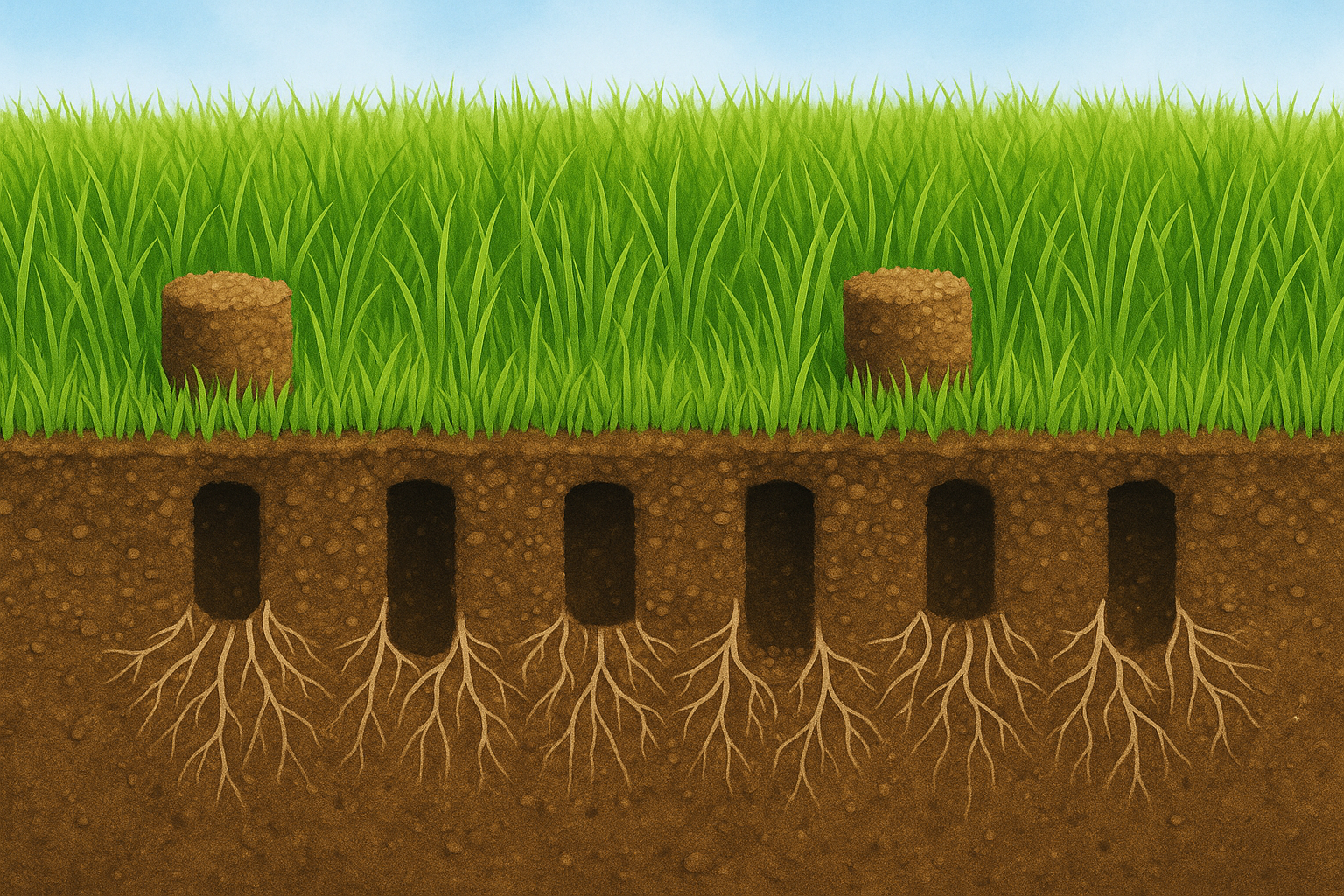
Core aeration is the process of using a machine to pull out small plugs of soil and thatch from your lawn, leaving behind a pattern of evenly spaced holes. Unlike spike aeration (which simply pushes holes into the ground), core aeration actually removes material, which relieves pressure and opens the soil structure.
Those little plugs might not look like much, but they do a lot of heavy lifting. Each one represents:
- A channel for air to reach the root zone
- A pathway for water to soak deeper instead of running off
- A direct route for nutrients to move into the soil
- Extra space for roots to expand and grow stronger
Over time, the removed material breaks down on the surface, helping to recycle organic matter while the soil below reorganizes into a looser, healthier structure.
Why Lawns Become Compacted in the First Place
So, if compaction is such a big problem, how does it happen? The short answer: normal life.
Most lawns become compacted because of things like:
- Walking, playing, and running on the grass
- Pets using the same paths over and over
- Heavy mowers and lawn equipment
- Construction and grading when the home was built
- Seasonal freeze–thaw cycles that tighten the soil
On top of that, many local lawns sit on soil that includes a good amount of clay. Clay holds nutrients well, but it also compacts easily and becomes very dense when it dries out. As the soil gets tighter over time, roots are forced to stay near the surface, water has a harder time soaking in, and fertilizer can’t penetrate where it’s needed most.
The result? A lawn that looks like it’s “stuck” – never terrible, but never great – no matter how much you water or feed it.
Why Aeration Is the Missing Piece in Most Lawn Care Plans
Most homeowners focus on what they can see: grass blades, color, weeds, mowing height. But the real engine of your lawn is underground. Without healthy soil and room for roots to grow, everything else is just a temporary fix.
Here’s why core aeration is so often overlooked:
- It doesn’t feel as “visible” as mowing or fertilizing. You don’t see an immediate cosmetic change the way you do after a fresh cut.
- It’s harder to DIY correctly. Renting and operating an aerator can be a hassle, especially on compact or uneven ground.
- It’s not always explained well. A lot of lawn advice stops at “fertilize and water,” without addressing the condition of the soil.
- It’s easy to assume the soil is fine. From the surface, you just see grass – not everything happening underneath.
But once you understand how much soil compaction affects root growth, water use, and fertilizer effectiveness, it’s hard to unsee it. Aeration is the quiet, behind-the-scenes step that makes everything else work better.
What Changes After Your Lawn Is Aerated?
A properly aerated lawn behaves differently than a compacted one. The changes can be subtle at first, but they add up quickly over the growing season.
1. Water Starts Working the Way It Should
Instead of puddling, running off, or just sitting on the surface, water begins to move downward into the root zone. This means:
- Less runoff onto sidewalks and driveways
- Less wasted irrigation
- More consistent moisture deeper in the soil
If you’ve ever watered your lawn and felt like nothing really changed, there’s a good chance compaction was to blame.
2. Roots Grow Deeper and Stronger
When soil isn’t packed tight, roots finally have room to expand. Deeper roots mean:
- Better drought tolerance during hot, dry stretches
- Stronger turf that holds up under traffic
- Faster recovery after stress, disease, or damage
Healthy lawns aren’t just greener on top – they’re anchored by a deep, dense root system below.
3. Fertilizer Starts Paying Off
If your lawn is compacted, fertilizer tends to sit near the surface or wash away. Once the soil is opened up, those nutrients have a clear path to the roots. That’s when you start to see:
- More even color across the yard
- Stronger, thicker blades of grass
- Longer-lasting results from each application
In other words, aeration helps protect your investment in fertilizer and other lawn products.
How Often Should You Aerate?
How often you should aerate depends on how your lawn is used and what kind of soil it sits on. Heavily used lawns, yards with a lot of clay, or properties that were heavily compacted during construction usually benefit from aeration at least once a year.
Lawns with lighter use or naturally looser soil may not need it as often, but most homeowners are surprised by how much improvement they see once aeration becomes a regular part of the plan instead of a once-in-a-decade event.
The most popular timing for aeration is:
- Early fall – often the ideal time, especially if you plan to overseed
- Spring – helpful after winter compaction if the soil is tight coming out of the cold season
Either way, the goal is the same: give your lawn a fresh start by opening up the soil and letting roots breathe again.
Why Aeration and Overseeding Work So Well Together
If core aeration is about fixing the soil, overseeding is about upgrading the grass growing in it. When you aerate and then spread new seed, the holes and loosened soil give that seed an ideal environment to germinate and root.
That’s why aeration + overseeding is one of the most effective lawn renovation combinations. Aeration solves the underlying compaction issues, and overseeding adds fresh, vigorous plants that thicken the turf and improve color.
If you’d like to dive deeper into overseeding itself, you can visit our dedicated Overseeding page.
Signs Your Lawn Is Probably Ready for Aeration
If you’re not sure whether your lawn needs aeration, here are a few simple indicators:
- The soil feels very hard when you walk on it
- Water tends to puddle or run off instead of soaking in
- Grass looks thin, even if you fertilize regularly
- Roots are shallow when you pull up a small section of turf
- The lawn is in a high-traffic area (kids, pets, gatherings)
You don’t need special tools to notice most of these. If the lawn just never seems to respond the way you’d expect, aeration is often the missing piece.
Why Most Lawns Never Reach Their Potential Without Aeration
You can mow perfectly, water on the right schedule, and apply the best fertilizer in the world—but if the soil is compacted, your lawn is still operating with a built-in handicap. Core aeration removes that handicap.
That’s why it’s often described as the most overlooked step in lawn care. It’s not flashy. It doesn’t make for a dramatic “before and after” photo the same day. But over the course of a growing season, it’s often the difference between a lawn that constantly struggles and a lawn that finally starts to thrive.
Ready to Give Your Lawn a Fresh Start?
If your lawn feels like it’s stuck no matter what you do, it might be time to start from the soil up. Core aeration opens the ground, supports deeper roots, and makes everything else you do—watering, fertilizing, overseeding—work better.
We provide professional core aeration for homeowners throughout the Miami Valley, using commercial-grade equipment and a process designed to give your lawn the best possible reset.
Or, if you’d like to learn more about the process and its benefits, visit our main Core Aeration service page for more details.