How to Aerate Your Lawn: A Step-by-Step Guide
Aerating a lawn yourself is entirely doable. It is also heavier, slower, and more awkward than most people expect, and there are four or five ways to waste the day. Here is how to do it properly, and an honest assessment of when renting a machine makes sense and when it does not.
We aerate lawns for a living, so read the last section with that in mind. But the guide itself is the same advice we would give a friend.
First: Do You Actually Need to Aerate?
Do this before you rent anything. A day or two after rain, push an ordinary screwdriver into the lawn with one hand.
If it slides in six inches with light pressure, your soil is open and aeration is not what is limiting your lawn. Save the money and look at shade, watering habits, or grass type instead. If you have to lean on it, or it stops at two or three inches, you have found a compacted layer — and that layer is the ceiling on everything else you do.
Get the Right Machine
This is the decision that determines whether the day was worth it.
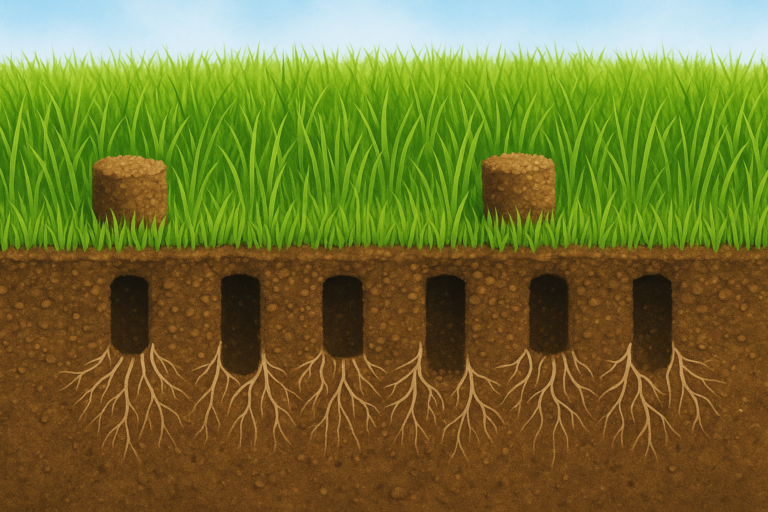
- Core aerator (hollow tines) — the one you want. It removes plugs of soil and drops them on the surface, physically relieving compaction.
- Spike aerator — avoid. It punches holes by forcing soil sideways, which compresses the walls of each hole. On clay it can leave the lawn slightly worse than before. Spike sandals are not lawn aeration.
- Liquid aeration — not a substitute. These are surfactants and soil conditioners. They may help water penetrate, but nothing sprayed on a lawn physically removes a plug of soil.
Rental core aerators are heavy — frequently 250 to 300 pounds. You will need a truck or trailer with a ramp, and realistically a second person. They are also hard on the operator: they buck, they wander, and steering one across a slope for two hours is genuine physical work.
Time It Right
In Ohio, late August through mid-October, with early September the best window. Spring — April into early May — is a workable second choice for aeration alone. Do not aerate in midsummer heat or drought; you will stress an already-stressed lawn and open it to weeds. The reasoning is in when to aerate and overseed in Ohio.
Prepare the Lawn
- Get the moisture right. This matters more than anything else. Aerate one to two days after a good rain, or water thoroughly the day before. Bone-dry ground makes the tines bounce and pull shallow broken cores. Saturated ground smears instead of coring and makes compaction worse. You want soil that is moist and crumbly, not muddy.
- Mow shorter than usual. Around two inches. Less leaf canopy means tines reach soil more cleanly, and if you are seeding afterward more seed reaches the ground.
- Mark everything buried. Do not skip this. Flag sprinkler heads, invisible fence wire, shallow cable and phone lines, septic cleanouts and distribution boxes, and well lines. Invisible fence in particular is often only an inch or two down — well within tine depth. Call 811 before you dig if you are unsure about utilities; it is free.
- Clear the surface. Toys, hoses, dog stakes, decorative rocks, anything that will jam a tine.

Making the Passes
Work in straight overlapping lines, like mowing. Then — and this is the part most DIY jobs skip — make a second pass perpendicular to the first. A single pass typically leaves holes too far apart to accomplish much. Two passes at right angles is roughly the density you are aiming for.
Go over compacted and high-traffic areas a third time: the strip from the driveway to the door, the gate approach, the worn line where the dog runs, anywhere cars park on grass. Concentrated traffic produces the most severe compaction on any property.
Check your cores as you go. You want plugs roughly two to three inches long. If they are an inch, the soil is too dry or the tines are worn — stop and address it rather than finishing a pass that accomplishes nothing.
Lift the tines when turning at the ends. Turning with them engaged tears the turf.
Afterward
- Leave the plugs. They look untidy and they are full of soil microbes that help break down thatch. They disappear in one to three weeks. Raking them up throws away part of the benefit.
- Seed now if you are going to. Immediately after aerating, while the holes are open, is the single best moment of the year to overseed — see should you aerate before or after seeding.
- Fertilize. This is the one time nutrients can reach the root zone directly through open channels. Use starter fertilizer if you seeded.
- Water. Deep and infrequent if you did not seed. Short and frequent if you did — see watering after overseeding.
- No pre-emergent or weed and feed if you seeded. It will stop your new grass germinating along with the weeds.
Full aftercare detail in what to do after aerating your lawn.
Mistakes That Waste the Day
- Aerating bone-dry ground. The most common failure. You will get inch-deep holes and no benefit.
- One pass only. Not enough hole density to matter on compacted soil.
- Using a spike aerator and expecting core aeration results.
- Worn tines. Rental machines get abused. Check them before you load up — blunt or bent tines will not pull a clean core.
- Raking up the plugs. Understandable, counterproductive.
- Hitting the invisible fence. Entirely avoidable with fifteen minutes of flagging.
Should You DIY or Hire It Out?
We sell this service, so weigh what follows accordingly. But there are genuine cases for both.
DIY makes sense when the lawn is small and flat, you can borrow or easily transport a machine, you are physically comfortable wrestling 250 pounds of equipment for a few hours, and you can pick your day based on soil moisture rather than a rental reservation.
Hiring makes sense when the lawn is large, sloped, or awkward to access; when you would have to rent, transport, and return the machine in one day regardless of whether the soil is right that day; or when you want the job done in the correct week of the season rather than the week the rental was available.
Once you have added up a day of rental, a truck or trailer, fuel, and your own Saturday, the gap between DIY and hiring is often smaller than people assume. But if the lawn is modest and you own a trailer, DIY is a perfectly reasonable call and this guide will get you a good result.
If You Would Rather Not
We do core aeration and overseeding across eight southwest Ohio counties, and those are the only two services we sell — so if we look at your lawn and think you do not need us this year, we will say so.
Request a free quote or call 937-304-1888.
The Best Way to Aerate a Lawn
If you take nothing else from this guide, take these five, because they are what separate an aeration that works from one that looks like it worked.
- Get the moisture right. One to two days after rain. This matters more than the machine you use — dry ground gives inch-deep broken cores and saturated ground smears.
- Use a core aerator, not a spike. Removing plugs is the mechanism. Punching holes is not.
- Two passes at right angles. One pass leaves holes too far apart to matter on compacted soil.
- Check your cores. Two to three inches long. If you are getting one, stop and fix the cause.
- Seed the same day if you are seeding at all. The holes close within days and that window is the entire advantage.
How do you use a rental lawn aerator?
Load it with a ramp and a second person — these machines run 250 to 300 pounds. Lower the tines only once you are moving, work in straight overlapping lines like mowing, and lift the tines before turning at the ends or you will tear the turf. Check the tines before you leave the rental yard: they get abused, and blunt or bent tines will not pull a clean core no matter how well you drive.
Frequently Asked Questions
Preparation questions from people planning to do it themselves.
Should you mow before aerating?
Yes. Cut the lawn shorter than usual, around two inches, the day before or the morning of. Less leaf canopy means the tines reach soil more cleanly, and if you are overseeding afterward far more seed will reach the ground rather than lodging in the grass.
Bag the clippings for this cut rather than mulching them, so there is no layer of debris sitting between the seed and the soil.
Should you water before aerating?
If it has not rained, yes — and this matters more than most people realize. Water thoroughly the day before, aiming to moisten the top three to four inches.
The target is soil that is moist and crumbly, not muddy. Aerate one to two days after rain or watering. Too dry and the tines bounce out shallow, broken cores; too wet and they smear the soil and make compaction worse.
Can you aerate hard, dry ground?
You can run the machine over it, but the result is close to worthless. On dry, compacted ground the tines cannot penetrate properly and you get holes an inch deep — nowhere near the compacted layer that is actually limiting the lawn.
Check a core partway through the first pass. If the plugs are consistently shorter than two inches, stop, water the lawn, and come back in a day or two.
How many passes should you make?
At least two, at right angles to each other. A single pass leaves holes too far apart to change much on compacted soil.
Give a third pass to high-traffic areas: the route from the driveway to the door, the gate approach, the worn line where a dog runs, anywhere vehicles park on grass. Concentrated traffic produces the most severe compaction on any property and it is where extra work pays off most.
Do you need to do anything about the plugs afterward?
Leave them alone. They break down on their own within one to three weeks, and while they do they return soil microbes to the surface, which helps digest thatch.
If you want them gone faster, mow over them once they have dried out and the mower will break them up. Do not rake them off — that removes part of the benefit.